26 March 2009

Any leftover champagne in the fridge?

It’s not often that Chefette has an unfinished bottle of champagne in the refrigerator (usually any opened bottle gets polished off with help from the Husband). But it just so happened today that she was improvising a risotto and decided to throw in the dregs of an opened bottle, which still had a bit of fizz. The addition of any acidic white wine to a risotto after toasting the grains of rice gives an extra hit of freshness, and balances the richness imparted by the butter and parmesan, and champagne definitely fits the bill. A simply delicious taste of spring.


Champagne and spring vegetable risotto
1T olive oil
1T unsalted butter
3 small Bermuda onions with green stalks (or two small regular Spanish onions)
1 carrot
2 small ribs of celery
1 ½ cups Arborio rice
200ml of champagne or prosecco
1 litre of hot homemade chicken stock (or substitute vegetable)
½ cup fresh or frozen peas
½ cup freshly grated parmesan cheese
Salt to taste


Chop the onions, carrot and celery into small, even dice. Sweat the vegetables slowly in the olive oil until soft but not coloured. Add the unsalted butter, and raise the heat to medium-high. Toast the rice with the vegetables for a good 3-5 minutes, then add the champagne and allow it to boil down until the liquid is reduced.


Reduce the heat to medium-low and add the hot chicken stock one ladle at a time, stirring regularly so the risotto gradually becomes creamy. Allow each ladle of stock to be fully absorbed before adding the next one. After about 15-17 minutes, add the fresh or frozen peas.


A couple of minutes later, the rice should be fully cooked and creamy, but still ‘al dente’ in the centre. The only way to know when to stop the cooking is to taste a few grains. Once the desired doneness is reached, turn off the heat, add the freshly grated parmesan, and season to taste. If the risotto is too thick, add a teeny bit more of the hot stock to loosen it.


Serve at once.

31 May 2008

Low-fat duck

Chefette is happy to be eating normally again, having being laid low last week by an evil gastrointestinal bug.

After a seemingly endless spell of nothing but dry crackers, vegetable broth and boiled rice for sustenance, I emerged from the culinary depths craving something long on protein, and full of flavour. Duck sounded perfect, and I had a vac-packed breast awaiting in the fridge. But on a hot and humid day, could I really stomach such a fatty meat?

Then I remembered Sally Schneider’s brilliant low-fat method for cooking duck breast as a lean steak. It involves removing the fat from the breast, dry-rubbing the meat with spices (I used ancho chile powder), and letting it sit for several hours or overnight. To flesh it all out, I popped to the store for a bunch of fresh local arugula and some Valencia oranges. The end result was this salad, a light and healthy take on duck a l’orange.


If you decide to make it, be sure not to throw away the skin with all that delicious, flavourful fat. Instead, render the fat down and reserve it for another use. Duck fat keeps ages in the fridge, and makes the most perfect roast potatoes or Yorkshire puddings, due to its high smoke point. And even if you are watching your saturated fats, you can add loads of flavour to a dish by mixing in as little as half a teaspoon of duck fat with a neutral monounsaturated oil like canola.

To render duck fat, cut the skin into small cubes and put them in a heavy-based pan over a very low heat with the lid on. A cast-iron pan is perfect. Stir the bits of fatty skin from time to time to prevent them catching, replacing the lid each time. Do not rush the process, keeping the heat on low will prevent scorching. Once the fat has fully liquefied, strain it through a fine sieve into a glass container with an airtight lid. Refrigerate when cooled.

Duck and orange salad with sesame vinaigrette
Serves 2 as a main, or 4 as a starter

Ingredients:
1 large duck breast
2 tsp ancho chile powder
Olive oil
A bunch of arugula
2 juicy oranges
¼ cup of pine nuts
For the dressing--
1 Tbsp white balsamic vinegar
1 tsp tahini (sesame paste)
1 Tbsp juice from one of the oranges
Salt and pepper
3-4 Tbsp Extra virgin olive oil

Method:
1. Remove the skin from the duck breast (the fat can be rendered for another use). Wipe the duck steak with kitchen paper, and then dry rub it with the ancho chile powder. Leave on a plate in the fridge under clingfilm for several hours, or overnight.
2. On a clean cutting board, peel the oranges ‘to the blood’, by removing all skin and white pith with a sharp knife. Over a small bowl to catch the juices, cut each section away from the membrane. If you need more juice for the dressing, squeeze out the remaining juice from the leftover membrane and the sections of orange peel. (Gerard Hirigoyen has a good demonstration video on YouTube showing how it’s done.) Keep the orange sections separate from their juice.
3. Make the dressing. Start by mixing the sesame paste and the vinegar into the orange juice with a little salt and pepper. Taste the mixture—it should be pleasantly balanced between sweet from the orange juice, tart from the vinegar, and savoury from the tahini. Adjust according to your taste, then add the extra virgin olive oil and whisk.
4. Remove the duck from the fridge around 20 minutes or so before you want to eat. Heat a grill or a ridged griddle pan until very hot.
5. Meanwhile, toast the pine nuts by tossing them in a dry sauté pan over a medium heat until they are a uniform golden brown.
6. Once the grill has pre-heated, pat the duck steak with a bit of kitchen paper, then season it well with salt and pepper. Rub it on both sides with a small amount of olive oil. Grill for 5-6 minutes, turning once, for medium rare duck. You could cook it longer, but be warned that without the natural fat, the meat will be tougher than a breast cooked with the skin on. Allow the duck breast to sit for 5 minutes, before slicing it thinly against the grain.
7. Wash and dry the arugula leaves. Season them with S&P, and toss them in some of the dressing.
8. Assemble the salad on each plate with a handful of dressed arugula, several orange sections, a spoonful of toasted pine nuts, and some slices of duck. Top with a bit of extra dressing, and any meat juices that may have fallen from the duck when slicing.

09 May 2008

All topsy-turvy

After almost 20 years of living in Northern Europe, Chefette’s internal culinary calendar was pretty much set in stone. Different months each had their respective treasures to be awaited, craved and devoured. May meant crisp and tender spears of English asparagus. August meant the start of greengage plums and juicy wild blackberries. October meant sweet-fleshed pumpkins and earthy wild mushrooms.

Here in Bermuda, a sub-tropical climate in the middle of the Gulf Stream, it’s all gone topsy-turvy. Loads of vegetables – like the local pumpkins – don’t seem to have a season at all. They’re on some kind of perpetual harvest all year round. Other bits seem to come at completely the “wrong” time, like strawberries in March.

For a while, this mixup of the seasons had me a bit freaked out. But I’ve come to realise that it can be a good thing. I’ve returned to an age of innocence, when everything’s new and unexpected.

New season’s sweetcorn
Imagine my unadorned delight when I saw the first sweetcorn of the season over at the Sea Swept Farm stand at Barnes Corner on Wednesday. I hadn’t been expecting it, but I had to buy it there and then. I cooked it on the grill with an ancho-lime butter, then cut the kernels off the cob to use in a sweetcorn and tomato salsa. Mmmmm.


Grilled sweetcorn with ancho-lime butter

Ingredients:
80g unsalted butter
Finely grated zest and juice of 1 lime
½ tsp ancho chile powder *
S&P
6 ears of sweetcorn in their husks, freshest possible

* To make ancho chile powder: Dry some ancho chilies thoroughly in a low oven, then allow to cool. Grind them to a fine powder in a coffee grinder or spice mill. This powder keeps well for a couple of months in an airtight jar.

Method:
1. Preheat your gas grill on the highest setting (or ignite charcoal if using a charcoal grill).
2. Gently peel back the husks from the ears of corn, but leave them attached to the ears. Remove all the silk. Soak the husks in a bowl of cold water for c. 10 minutes.
3. Meanwhile, make the ancho-lime butter. Allow the butter to soften to the point where it is pliable, but not greasy. Cream the butter with a wooden spoon. Add the lime zest, ancho chile powder, and a generous seasoning of S&P juice, and combine thoroughly. Finish by mixing in as much of the lime juice as the butter will absorb.
4. Remove the husks from the soaking water, and lay on a baking tray. Use a bit of kitchen paper to make sure the kernels of corn are dry. Then, using your fingers, smear a generous wodge of butter evenly over each ear of corn. Fold back the husks, and tie into place with bits of string.
5. Grill for around 15 minutes, turning regularly. It may take a bit longer, depending on how thick are the husks. When the outer husks are starting to become charred, the corn should be done.
6. Carefully remove the husks and serve.

17 April 2008

Back in the blogosphere

After the myriad of changes that follow an international move, life in Bermuda has finally settled down enough for Chefette to get back into the blogosphere. In the interests of fair disclosure, I should probably confess that a lot of the changes have been easy to get used to. Sunshine in January, regular walks along the beach, and Dark & Stormy’s can have an impact for the better on one’s attitude to life.

But what about the food?

Chefette wishes she could say that it was all deliciousness and succulence. But it ain’t quite so simple.

Foodie in Bermuda

Well over 90% of the food eaten in Bermuda is imported, mainly from the US. Factor in the shipping costs and import duties, and it doesn’t take long to realise why prices here would induce sticker shock for most shoppers in the US or the UK. Plus, only locally-owned stores are allowed in Bermuda, so it’s no surprise that grocers on an island of around 67,000 inhabitants won’t have the same economies of scale as a Tesco or a Costco. As one local website put it, “What a couple can buy in the USA for a week will be less expensive than buying food in Bermuda for two days.”

As for the quality of the produce in the supermarkets, it can charitably be described as very uneven. ‘Fresh’ herbs are frequently brown and limp. Nor is it unusual to find a bruised or mouldy piece of fruit in among the display bins.

So how does a self-respecting foodie survive? By procuring as much food as possible outside of the supermarkets. And in one way at least, Bermuda positively excels in direct-to-consumer food distribution. Namely, the cooler of fish by the side of the road.

Heavenly fish

Lots of Bermudians buy their fish directly from fishermen at the side of the road (or off the back of a boat). Sometimes there’s a sign out, saying ‘Wahoo’ or ‘Jacks’. More often than not, there’s just a chap sitting next to his parked car with a couple of big white coolers and a set of scales. Some Fridays he’s there early, some Fridays he’s not there at all, and you never quite know what fish he’ll be selling. All of which adds to the thrill when you get a freshly caught bargain.

The local fish are heavenly eating, and amazing value for money compared with London prices. Last Friday morning, for example, I bought a 2.5 kg red snapper from a fisherman on Trimingham Road for $50. It was a beautiful specimen, really firm with sparklingly clear eyes, that could easily have gone for £60 ($120) at a London fishmonger’s. So beautiful, in fact, that I took a picture. Half of it got eaten at a dinner party at Chefette’s that night, pan-fried and garnished with herb butter (recipe below). And the leftovers went into a mouthwateringly bright fish soup.

Not every fish bought from a cooler will be of top quality. Some fisherman will post a sign for ‘Fresh Bermuda fish’, but when you ask them when it was caught, they’ll happily confess that it spent a few days/weeks in their freezer. Others have been known to try to pass off parrotfish as snapper.

Over time, though, you get to know where and when your favourite fishermen are likely to be. And of course, the locals get their best fish for free when a buddy comes back with extras from his latest day out on the boat. Maybe I need to drop more hints with boat-owning friends now that summer is approaching…

Pan-fried red snapper with herb butter

Ingredients:
80g unsalted butter
2-3T of mixed finely chopped fresh herbs*
1 small garlic clove, peeled and mashed to a paste with a pinch of kosher salt
Zest from ½ a lemon and a squeeze of the juice
4x fillets of red snapper, 170-200g each
Salt & pepper
Olive oil

Method:

1. Make the herb butter ahead of time. Allow the butter to soften to the point where it is pliable, but not greasy. Cream the butter with a wooden spoon. Add the herbs, garlic and lemon zest and juice, and combine thoroughly. It should be pleasantly light green in colour from the herbs.

2. Form the butter into a roughly cylindrical shape, and then roll it up tight in cling film like a sausage. Refrigerate until firm. (It will hold like this in the fridge for a week or so).

3. Season the fish fillets with salt and pepper on both sides. Heat the oil in a heavy sauté pan over medium-high heat, and when the oil is hot but not smoking, add the fish skin-side down. Cook until the fish is just cooked through, turning once. (How long this takes will depend on the thickness of your fillets. If they are very thick, you will get the best results finishing them in a 200C/400F oven after you have turned them over.)

4. While the fish is finishing, cut thin rounds from the chilled stick of herb butter. To serve, garnish each fish fillet with 1 or 2 rounds of the herby butter on the flesh side, so that the mixture melts into the flesh of the fish.

* I used a mixture of chives, parsley, thyme and oregano

22 April 2007

First in a chain of goodbyes

It's official. Chefette will be moving to Bermuda at the beginning of July.

The Husband has landed himself a fantastic job opportunity, which will involve a 3-4 year commitment. So it's 'goodbye' to fabulous theatres, hard water, and the world's most overpriced public transport system, and 'hello' to bright sunshine, beautiful beaches and hideously expensive housing.

Saturday was my last night working at the restaurant. And would you believe it, on my final night, we had a Michelin-star chef in the dining room. I got to cook for Angela Hartnett, the head chef at the Connaught in London. Her uncle is one of our regulars, and they were both there with a big family group. (She ordered the panzanella salad and the lamb stew, in case any of you out there are interested). Didn't get an opportunity to meet her, but it felt pretty cool, nonetheless, having a VIP chef eating my food. And her sweet uncle came into the kitchen at the end of the night to wish me all the best for Bermuda-- a thoroughly classy chap.

After the end of service on Saturday, the staff all shared a bottle of prosecco in the kitchen as we were cleaning down, which was fun but also a little bittersweet. I will miss C to be sure. Could not have asked for a better boss. I have learned loads from her, and

Friday night was incredibly busy (we did 49 covers!), but it was also oodles of fun. A big happy gaggle of friends came into the restaurant, and then we all decamped back to our flat after service for a nightcap en groupe. Special kudos must go to the Husband, who did a valiant job tending the bar back at ours until almost 2am, even though he had to get up to catch a train at 6.30am that morning.

One final titbit of news before I skedaddle: I passed my wine exam (hoorah!), and now have my Advanced Certificate in Wine and Spirits from the WSET. Who knows? Maybe a wine-related job might be calling in Bermuda??

25 March 2007

One of those days

Some days, you’re better off not going into the kitchen. Chefette had one of those days on Friday.
  • I burned my biscotti.
  • I dropped an entire container of freshly made porcini mushroom soup on the floor of the kitchen during service.
  • I sent out a chicken liver salad without one of the key ingredients specified on the menu (black grapes).
  • I mixed up the orders for Table 4 and Table 9.
  • I cut my left index finger while making the staff meal.

Not exactly my best ever day at the restaurant!

Thankfully, I’m off to Paris next weekend, when my parents will be visiting. Very glad to see that my father, on the packed tour itinerary he sent me, has allotted time to eat ice cream at Berthillon (the famous Paris ice cream parlour, known in the Chefette household as “the Mother Ship”). Now that’s what I call having one’s priorities in order!

19 March 2007

Last night's dinner

Sometimes, at the end of a long weekend in the restaurant, the last thing you want to do is cook at home. I remember Anthony Bourdain once writing that at times all he has energy for when he gets home from service is wolfing down a couple of Krispy Kreme doughnuts.

So when Chefette got home from Mother’s Day lunch service yesterday (after serving 46 covers for Saturday dinner and finishing at 1am), needless to say there wasn’t a whole lot of zip left in the tank.

Thankfully, there were steaks in the house. Organic Herefordshire beef rump steaks. Mmmm. I served them with sautéed chestnut mushrooms, and some bubble & squeak made with leftover potatoes and Savoy cabbage. Total preparation time, under 20 minutes.

Anyway, they looked so lovely sizzling away on the ridged griddle plate I had to take a picture.

09 March 2007

Starting to share the news

Just back from service. Time enough for a mini-blog.

I texted C that I would be in a bit early for service tonight, for us to have a chat. So I told her about the Husband's international job offer, and let her know that I probably won't be able to work for too much longer. Needless to say, we both got a wee bit misty-eyed and had a hug. But she was genuinely pleased for the Husband's good fortune. And she also said she was glad that at least I won't be leaving her to go to another restaurant. People, I am surely going to miss that kind-hearted lady!!

To top it off, she's let me put my top 2 requests for dishes on the menu for tomorrow. One will be a chicken liver bruschetta, finished with Marsala wine and porcini mushrooms. The other will be an antipasto of grilled vegetables with buffalo mozzarella and fresh pesto. Cross your fingers that they'll sell well.

The only other thing on my mind is a bit of advice to all cooks out there. Also a hard-earned reminder to self. Never, Ever, Ever (!) touch your eyes after you've been working with hot chillies during service. Even if you've washed your hands multiple times. 'Coz that hot chilli oil gets everywhere, and it doesn't take much to induce a painful burning sensation. (Gentleman, I understand from anecdotes told to me during chef school, that this advice applies doubly to boys visiting the urinals after service ...)

04 March 2007

Sunday lunch

London in at the end of wintertime is dire. It's miserably cold, grey, wet and rainy. But right now, Chefette is too well fed and watered to care. She has just got back from a memorable Sunday lunch at Pont de La Tour (the Bar & Grill side, not the Restaurant side), where she indulged in a lusciously dressed langoustine cocktail, followed by chargrilled calf's liver with bacon, mashed potato and caramelized pearl onions. The Husband had a crab mayonnaise followed by a medium rare sirloin steak with deeply golden chips and bearnaise sauce. We shared a bottle of 2005 Marsannay (well rounded, and full of ripe red fruits), plus I had a 2003 Californian ice wine for dessert (the 2004 Bonny Doon California Vin Glacier -- quite lusciously sweet, with vanilla and honey notes). The husbanded opted for a slice of the classic lemon tart. How spoiled we are to have this place within 15 minutes' walk from the flat!

The coolest thing of all was the feeling that I got when I looked over their dessert menu, to see they were serving rhubarb jelly. As it happens, I recently made rhubarb jellies at the restaurant, and C (the head chef) put them on the menu. Let me tell you, it felt tres chic to see that a top London bistro also has your dish on its menu! At one point, I got a glimpse of their version coming out of the kitchen. Their jelly looked quite similar, but mine was more lavishly decorated. I garnished my jellies with some of the rhubarb compote taken from the base mixture (flavoured with cinnamon, sugar and blood orange), as well as a scoop of homemade vanilla ice cream, and a dollop of thick cream.

As it happens, we were celebrating a couple of special recent events. First, is the Husband's acceptance of a New Job Overseas (of which readers of Chefette will hear more when it's publicly announced). Second, is that Chefette has just finished taking her Advanced Certificate course at the Wine and Spirits Education Trust. The course was very intensive (Monday to Friday, 9am to 4.30pm each day), with tastings and lectures, followed by 3-4 hours of reading and note-taking at home every night. Nevertheless, it was fun to be back in the classroom for a week, tasting wine with other students/teachers. All in all, we tasted around 90 wines over 5 days. Everything from Gran Reserva Rioja to Margaret River unoaked Chardonnay to dry Oloroso sherry. We finished with a 2 1/2 hour exam.

The first part of the exam was a blind tasting. We had to check off the different characteristics that a particular wine displayed from a master list (intensity, fruit characteristics, acids, tannins, body, etc.). Then we had to guess the type of wine, the price per bottle, and the quality level. Then came a multiple choice section of 50 questions, followed by 4 short essay questions on wines, spirits, vinification and viticulture. It wasn't easy, folks. Keep your fingers crossed that Chefette passed.

17 February 2007

Valentine's day

Candy hearts and red roses it wasn’t. Chefette learned a new meaning this year to the phrase: “Valentine’s day”—big-time mise-en-place, and a non-stop busy service!

On the big night, we offered a special six-course tasting menu. We’d taken around 68 bookings (compared with c.35 on a typical busy night). We'd even started service an hour early to accommodate extra customers.

For my part, I kicked off the first four hours of the afternoon making 58 portions of beetroot tortellini. That’s 178 of the little critters. Then, during service, I had to open loads of oysters – over half a crate of them. And although I shan’t be winning any oyster speed contests for a good while yet, at least I managed to pick up the pace a bit by the end. Suffice to say, after all that shucking, my right thumb was amazingly sore the next day!!

Fortunately, everyone on staff was working on Valentine’s night. All three waiting staff, and four of us in the kitchen. Mostly things went smoothly, although there were a couple of instances of major staff confusion on table numbers. (Usually, we lay the tables out in a mix of 2s, 4s and 6s. But on Valentine's night the entire restaurant was laid out in 2s, so the table numbering got a bit creative at times). At one point, had brought orders for two different Table 12s. And then Table 8 kept getting Table 11’s food.

The low point of my night came when I had to dash outside into the courtyard to be sick. (Literally sick. In a black bin liner.) It wasn't the flu, just an oyster that disagreed with me. As I get older, my system is becoming hyper-sensitive to oysters. I end up getting sick more times than not after eating them. Even the cooked ones are starting to affect me. Woe is me.

Anyway, I'd love to know if any of you have any views on the recently held “1 million baht dinner” in Thailand?

It sounds like an amazing meal, but even so I cannot believe there was not a single Thai dish on the menu! An outrage.

05 February 2007

Cooking a pig's head

Apologies to anyone who (a) is a bit squeamish, or (b) thinks that Chefette wastes far too much space droning on about offal. But it’s not every day that you get to cook a pig’s head.

C and I spent an afternoon in the kitchen last week, each transforming a pig’s head into something fabulous. She made “brawn” with hers, a type of pig’s head terrine, with green peppercorns. I made mine into ravioli, with a red wine sauce (method recapped below for anyone who is interested).

If you're thinking about getting a pig's head, be aware that it's not exactly convenience food. The cooking wasn't particularly difficult, but there was a lot of time involved. It took me around 3-4 hours to cook the head, and another 2 hours to make the ravioli. The good news is that the results were spectacularly tasty, both for the brawn and the ravioli. After a long, slow cooking time, the meat from a pig's head is rich and flavourful, and the braising juices are full of body.

But it was the economics of the exercise that really made an impression on me. Each pig’s head cost £2.50 from the butcher. C got around 10 starter portions of terrine (which we put on the menu at £4.50), and I got around 25 starter portions of ravioli (which we put on as a special at £5.00). We sold all the terrine and 7 portions of the ravioli in two days, for a cash take of £80. And we were able to freeze all the remaining portions of ravioli, so when those sell it’ll bring an extra £90. All in, that’s a cash take of £170 on ingredients worth well under £10!

Off to Paris tomorrow with one of the Husband’s glamorous cousins for a girlie break. Will be eating at Bistro Paul Bert on Wednesday night. I seem to recall they have brawn on the menu – perhaps a comparative taste test is in order?

Method for pig’s head ravioli

For the ravioli:
Cover the pig’s ears with tinfoil to prevent burning. Roast the pig’s head whole on a bed of onions until it turns a dark golden colour on the outside (around an hour).
Then put the roasted head into a braising pan with onions, carrots, celery, a pint of chicken or veal stock and about half a bottle of red wine. Cover and seal with aluminium foil. Braise until the meat around the cheeks is very tender and falling off the bone, around 2-3 hours.
Allow the head to cool slightly after you take it out of the oven. Then, using your fingers, pull the meat off the head, taking care to remove all fat/skin/sinew. Shred the meat with your fingers into small pieces, and put into a bowl.
Ladle a couple of spoonfuls of the braising liquor over the shredded meat. Taste carefully and adjust seasoning as necessary. The finished mixture should be well flavoured, but still fairly dry – too much steam when cooking may cause your ravioli to explode.
(NB: the cooked brain can also be incorporated into the meat mixture. It should be moist, soft and springy when cooked. The flavour is extremely mild, and it adds a smooth texture to the mixture. The tongue meat is firmer and stronger tasting. I would reserve it for another use.)
Roll out some homemade pasta dough into thin sheets for the ravioli, and fill with spoonfuls of the shredded, braised meat. Take care when sealing the ravioli to press out any excess air pockets.

For the sauce:
Degrease the remaining pan juices as best as possible, then reduce them down until they are dark and fairly concentrated. Taste the mixture at regular intervals, until you reach the desired concentration. Then add a couple of ladles full of homemade tomato sauce (or simply some chopped tinned tomatoes and some sweated garlic), and cook for a further 15 minutes. Season as necessary with salt and pepper. A pinch or two of sugar can also help to bring out the tomato flavour.

Serve the ravioli with a small amount of the concentrated sauce, and some freshly grated parmesan.

31 January 2007

A Foodie’s impressions of Saint Lucia

Before the 14th of January, Chefette’s only previous experience of food in the Caribbean was the Americanised offering of a large resort near Puerto Rico about five years ago. (Overcooked Chilean sea bass anyone?)

Fortunately, this time around in Saint Lucia, she and the Husband had plenty of chances to taste the real deal. They munched their way through as many of the local treats as possible. Imagine, if you will, eating freshly cooked fish cakes with hot sauce, bought from a vendor on the side of the road near a waterfall. Or being served grilled blue marlin, marinated in green spices, at a rickety sidewalk table on a balmy evening under the branches of a giant breadfruit tree. Or sipping on a positively lethal spiced rum punch at the Friday night street party in Gros Islet.

The food offering at our resort wasn’t uniformly perfect (at least one of the chefs was far too heavy-handed with the salt). But there were plenty of culinary successes when featuring island’s local produce. Favourite dishes that come immediately to mind included the sweet and tender conch salad with ripe tomatoes and fresh basil, and the homemade syrup for the breakfast pancakes infused with nutmeg, mace, bay leaf and star anise. Best of all were the tropical fruits. I think I ate my weight in slices of bright orange, perfectly ripe papaya finished with a squeeze of fresh lime juice. Yum!

The Husband enjoyed the food, too. But I think his top culinary moment came after dinner one evening in the beachside bar, as he sipped a glass of the locally made Chairman’s Reserve rum – an amber-tinged golden concoction, served over the rocks – while smoking his favourite brand of Cuban cigar.

Anyone interested who wants to see a few foodie pictures from the trip, can click on the pictured link. It’s worth it, if only to see the lack of refrigeration at the butcher’s market stall! (By the way, the cocoa beans pictured at the Fond Doux Estate are destined to make their way into Hershey’s chocolate bars.)

14 January 2007

Little ears

It's just after 1am, and in a little over 10 hours (touch wood) Chefette will be boarding a British Airways flight to St Lucia in the Caribbean. So there's just enough time to share a couple of juicy titbits from this week's kitchen adventures.
  • Spent most of the restaurant time this week getting the hang of making orecchiette pasta. It is a really easy recipe (see below* for anyone who is interested). Anyway, after a not-too-brilliant first attempt, things definitely had improved by my third batch. It all culminated in a bit of a "high five" moment today, when a visiting VIP who happened to be eating in our restaurant (a former Romanian president of some sort) -- told my boss that he loved the oricchiette. Tony Blair it ain't, but still. It always feels cool to hear praise for your food.
  • The Husband recently discovered a new cocktail on a recent jaunt to Bermuda, and has introduced it chez nous. Namely, the 'Dark and Stormy'. A mixture of dark rum and ginger beer, served over the rocks -- the percentage of alcohol to be determined by individual preference, but the Husband recommends a 40-60 ratio. It felt like drinking a refreshing, effervescent infusion of gingerbread man. (Must remember to serve those next Christmas in fact.)
  • Lastly, a wee confession. I'm starting to become addicted to steamed white basmati rice. I must have eaten it at 4 meals at least during the past week (once in a fried rice option). Please, please send me any fantastic recipes you have that incorporate long grain rice, I'm dying to roadtest them.

Toodle pip.

* Quick Recipe for Orecchiette

Mix together on a countertop or in a bowl: 255gr of plain flour, plus 150gr of semolina and half a teaspoon of salt. Then add 150-250ml of lukewarm water-- the exact amount will depend on how much water it takes to make a soft dough. (Tip: The dough should feel only very slightly sticky before you reach the kneading stage.) Knead for c. 5-8 minutes, until the dough feels smooth and a bit pillowy. Wrap in clingfilm and leave in a cool place for at least 15 minutes.

To shape the orecchiette, roll out small handfuls at a time into thin (1cm diameter) sausages. Cut thin rounds out, and then push the rounds into little ear shapes (around the size of a thumbprint) by applying pressure your thumb. Leave to dry on a piece of baking parchment sprinkled with semolina. Cook in rapidly boiling salted water until al dente. (Exact cooking time will depend on how dry the orecchiette are -- drier=longer cooking.)

05 January 2007

Dieter's delight

Well it’s back to work today, after a wonderfully relaxing break for the holidays. (For “relaxing”, read: 3 weeks-plus of taking virtually no exercise, and eating plenty of gingerbread men, iced butter cookies, slices of rich fruitcake topped with icing sugar, and every other fattening holiday treat known to man on a daily basis …)

Like many of you, Chefette and the Husband are starting the New Year full of resolve to lose an inch around the middle, and firm up those jiggly bits. I should clarify at once that, in our household, this will under no circumstances involve eating less. The Husband’s appetite is grand, and never wanes. And nothing is surer to drive Chefette running, panicked, into the arms of a chip butty than the prospect of food deprivation.

What it does mean is taking care to put plenty of tasty, wholesome food into one’s body. Let me state emphatically that this is not about consuming those diet food products dreamt up by the processed food industry. What on earth is the point of reduced-calorie cheese or zero-fat biscuits? They taste disgusting, and serve only to drag you down into the mindset of deprivation, reminding you of how much you’d rather be eating the real thing.

Much better simply to eat more of what you love that’s really good for you. Going for those favourite dishes that are naturally splendid in flavour, only they just happen to be low in fat, or high in vitamins.

For me, nothing is more of a dieter’s delight than steamed fish. High in lean protein, low in fat. And best of all, the steaming process protects all the delicate flavours. Usually I do this Chinese style, sea bass fillets steamed with black bean sauce and garnished with lashings of thinly sliced spring onion. But last Wednesday I had a successful go with a nice trout fillet, so thought I’d share the recipe. (Traditionally, en papillotte means steaming in individual paper parcels, but I find that foil makes a more effective seal.) Enjoy whether or not you are on a diet!

Trout fillets en papillote with lemon & dill dressing

Serves 2

2 trout fillets of around 150-175g each, skin left on
½ a large leek (including some white and some light green)
1 tablespoon of Noilly Prat (or other white French vermouth)
Sunflower spray oil
Salt & pepper

For the dressing:
3 tablespoons of extra virgin olive oil
Juice of ½ a lemon
1-2 tablespoons of finely chopped fresh dill
S&P to taste

Preheat oven to 425F/220C.

Wash the ½ leek well. Cut down the centre lengthways, and leave the segments to soak in plenty of cold water for a good 10-15 minutes. The place where the green meets the white is usually the most gritty, so take extra care to rinse out any flecks of dirt.

While the leek segments are soaking, line a lipped baking tray with aluminium foil. Try to choose one that is just big enough to hold the fillets. Spray a very thin layer of sunflower oil on the foil. Put the fish fillets skin side down on the oiled surface. Season lightly with salt and pepper.

When the leek segments are thoroughly cleaned, cut them on the diagonal into thin slices. Scatter these evenly over the fish fillets. Sprinkle the vermouth over the fillets. Cover the entire tray with a top layer of aluminium foil, making sure the edges are well sealed. Bake on a high shelf in the oven for 8-12 minutes, depending on the thickness of the fillets.

While the fish is in the oven, mix all the dressing ingredients together. As soon as the trout is barely cooked through, remove from the oven, and carefully slide the fillets onto your plates, and pour the dressing over top.

03 December 2006

Adrenalin high

Just got home from my best ever evening service at the restaurant. We had 40 (!) bookings, which is near maximum capacity for the tiny neighbourhood establishment where Chefette plies her trade. Plus a couple of walk-in tables. And although technically the hours of evening service are between 7pm and 11pm, in reality the tables are never evenly spaced over that time frame. Most of the diners on a Saturday evening arrive in two waves, the first at around 8pm, the second an hour later. All of this results in a frenetic hour-and-a-half-long tornado of concentrated physical and mental exertion, in which you're trying to whip out the best food you can in as short a time as possible.

Suffice to say, C and I were well and truly in "the zone" tonight. At one point, I had on the go -- simultaneously, mind you -- 5 bruschetta under the grill (finished with a rub of freshly cut garlic and a drizzle of olive oil), a pumpkin soup, 3 orders of beetroot tortelloni with gorgonzola sauce, 2 orders of mussels in beer batter in the deep fryer, 2 skewers of balsamic-marinated veal heart on the griddle plate, while also plating up a salad of rocket, buffalo mozzarella, parma ham and grilled figs. All with different cooking times, and at two different stations. If that's not multi-tasking on adrenalin, I don't know what is! Never in my wildest dreams in cooking school did I imagine I'd ever be able to do that kind of juggling and still turn out delicious food.

Looking back on it, what well and truly shocked me was... it didn't actually seem that hard. I've somehow started to tap into a new level of intuition at the cooker. A zen-like state of knowing instinctively which bits can be left to grill, fry or simmer while something else needs close attention. I still have to concentrate like crazy to get everything prepped and plated in the right order. But once I've spent 20-30 seconds figuring out the running time, the execution is falling into place more and more smoothly.

Best compliment we had tonight came from one of the guests who used to be a chef at the Ivy (one of the most famous restaurants in London). He told one of the waiters he recently moved to the area, and after reading our menus in the window these past few weeks, he vowed to give us a try. He came tonight with his wife and said he really loved the food. What a warm feeling of pride welled up inside me when I heard that!

To cap off the evening, C and I finished with a couple of glasses of chilled prosecco while we were cleaning down and turning out the staff meal. A perfect aftermath to the buzz of a busy service. But I can't leave you all thinking this restaurant malarkey is all sweetness and light. I just took a look down at my hands, and my fingernails are ringed with a thin layer of reddish black grime all the way round. Not all that glamourous, eh?

10 November 2006

Mastering pumpkin gnocchi

A very short posting from Chefette tonight, before she and the husband depart for a brief weekend getaway to Paris tomorrow.

Just this minute got home from a medium-busy Thursday night service at the restaurant. We didn't do too many covers (maybe around 2o, compared with a maximum of 45-50). But neither did we did have P, the incredibly hard-working (and hunky!) Polish kitchen porter. So whereas I usually never have to touch a mop or a dirty pan, tonight C (the head chef) and I had to do all the dishwashing and cleanup between us. Fortunately, C did almost all of the washing up. I got the easy end of the deal, putting things away, cleaning down the food prep surfaces and sweeping /mopping up the floor. Ah, the glamour of life as a chef ...

One good thing to come out of tonight's service was the realisation that I've now got a handle on the art of making pumpkin gnocchi. To the point where my gnocchi are noticeably superior to those made by our head chef. Tonight when I came in, she had me cook off the mixture she'd made yesterday, which was too full of flour, and consequently a bit too heavy and rubbery. Nor did it have much intensity of pumpkin flavour. She herself said that it turned out 'weird'.

So even though I'm away tomorrow and Saturday in Paris, when I offered to make her a batch for tomorrow, she positively jumped at the offer. It felt pretty cool to be able to simultaneously whip up a delicious, well-textured gnocchi mixture while simultaneously cleaning down.

So for any of you who are interested, I'll share my top 3 pumpkin gnocchi tips.
  • After whizzing the roast pumpkin into a puree in the food processor, be sure to cook all of the excess moisture out of the pumpkin puree before seasoning the mixture.
  • Season and add the flour to the puree while it is still piping hot. Nutmeg makes a good addition, as well as salt and pepper.
  • Add as little flour as possible to the seasoned puree. If in doubt, shape a little dumpling and test it in boiling water to see if it's too soft. Only add more flour if the gnocchi starts to disintegrate in the water. If it holds its shape, it's good to go.

Au revoir mes chers amis.

03 November 2006

Nothing good comes without a price

Chefette has been loving all the autumnal bounty these past few weeks. She has been positively lapping up sweet, nutty Savoy cabbages and rich, golden butternut squash. But topping the fall flavour hit parade have been wild mushrooms.

Check out the beauties pictured above. I bought them at Borough Market last weekend – a mixture of cepes, pieds de mouton, chanterelles, charcoal burners and boletes. They fulfilled their destiny in a wild mushroom soup I did last Sunday, when we hosted a lunch for some of the Husband’s work colleagues and their spouses. A soup that, while delicious, ended up nearly scuppering the whole luncheon …

The soup itself wasn’t too difficult to put together. I started off making 2 types of concentrated mushroom stock. One was nothing more than the strained liquor got from soaking dried cepes in hot water for 20 minutes (after which I drained the cepes and reserved them to one side). The other stock I made by browning 900g of ordinary sliced button mushrooms in a little oil until really, really dark brown, then simmering them in 4 cups of water with some sliced shallots and chopped parsley until all the flavour had been extracted from the browned mushrooms.

Once I had the two stocks made, I sautéed the finely chopped wild mushrooms with some more diced button mushrooms over high heat in batches until nicely browned. Lastly, I sweated off some Spanish onions in olive oil in a soup pot until nicely soft and sweet. At that point, I added in all the chopped sautéed mushrooms, the drained, soaked cepes, the two mushroom stocks, plus some Madeira and seasoning (a herb bouquet of thyme and bay leaves, plus some salt & pepper) and allowed it all to simmer slowly for an hour or so, to let the flavours meld together. I finished the soup by adding a swirl of warm double cream to each bowl, and topping with chopped fresh chives. Then I served them with simple bruschetta (toasted slices of sourdough bread rubbed with a cut piece of garlic and drizzled with olive oil). Mmmmmm.

None of that was really too difficult. But, as we all know, nothing that is truly good in this life comes without a price. And the painful bit of the whole operation was getting all of the mushrooms cleaned.
I don’t just mean the hour+ it took to brush / wipe off all of the excess dirt off the mushrooms. I’m referring to the surge of panic that coursed through my veins when I realised (a) how many little worms of the forest – still alive and wriggling – had made their homes in the tiny wild mushroom crevices; (b) how long it was going to take to get the critters out of my gloriously tasty fungi before the soup could be served to the guests (in the end, it took an additional hour). If it hadn’t been for the heroic efforts of the Husband, drafted in as an emergency commis on de-worming patrol, I never would have got the rest of the lunch out on time!

So the next time you enjoy your lovely wild mushroom soup, sauté or omelette, spare a thought to the hard-working kitchen slave or forager who lovingly cleaned (and de-wormed) them…

19 October 2006

Fridgeless

The history of Chefette's fridge-freezers has been long and varied. There was the first ever university dorm room fridge, stocked only with Evian, Tab, and Beaujolais Nouveau. Then there was the fridge from the 16th Street apartment in DC, which she and the Husband accidentally punctured during an ill-considered attempt to chop away the layers of permafrost crystals that had built up in the freezer compartment with a 10-inch carving knife. (Which, incidentally, introduced Chefette to the importance of bribery in Nigerian culture, when the building superintendent made clear that he would gladly get us a brand new replacement fridge from the building management in exchange for the paltry sum of $50.) And let us not forget the fridge in Chefette's first ever London apartment, which was smaller than a table-top TV, and could barely hold a dozen eggs, let alone a pint of ice cream.

But the current model -- a beautiful ATAG brushed stainless steel number found by the Husband seven years ago -- has always been a loyal and trusted friend. The ice maker functioned perfectly no matter how many party guests we threw at it. The cheese drawer insulated the aromas from even the most smelly French chambertin. And the refrigerator compartment was so efficient we used to call it "The Good Time Machine", for its ability to keep foods fresh long past the Use By date.

So you can imagine the traumatic hand-wringing that ensued when we arrived back from a brief jaunt in New York earlier this week to find the ice-maker broken, the freezer compartment as hot as a warming oven, and the top half of the fridge compartment worryingly close to room temperature. I have had to write off loads of food from the freezer, including four beef marrow bones, a packet of duck breasts, half a pork belly, three chicken carcasses saved for stock, a batch of hand-made puff pastry, and enough yeast to make 10 loaves of bread.

So for the moment I am fridgeless, until I can get the repairman to come out to work his magic. Not much to be done week except to subsist on tinned tuna sandwiches and Chinese takeaways.

04 October 2006

New look Chefette

Chefette has been hit by that autumnal back-to-school feeling. Only instead of buying a shiny new case full of sharpened No. 2 pencils, she has decided to update the look of her blog.

Not sure what's been more fun today. Giving the blog a new makeover, or slow-roasting a thick end of pork belly with soy sauce and Chinese spices.

29 September 2006

The World's Biggest Coffee Morning

Today MacMillan Cancer Support has been holding a fundraiser called the World's Biggest Coffee Morning. People all over the UK have organised coffee mornings in the community, collecting donations to help people whose lives are affected by cancer.

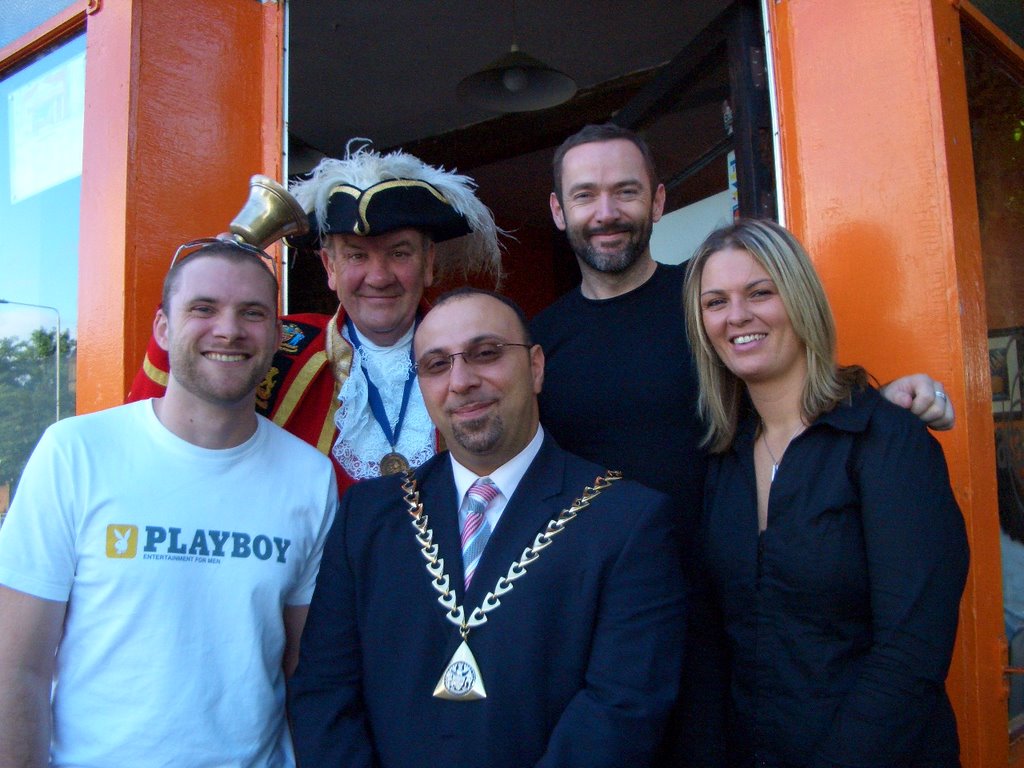
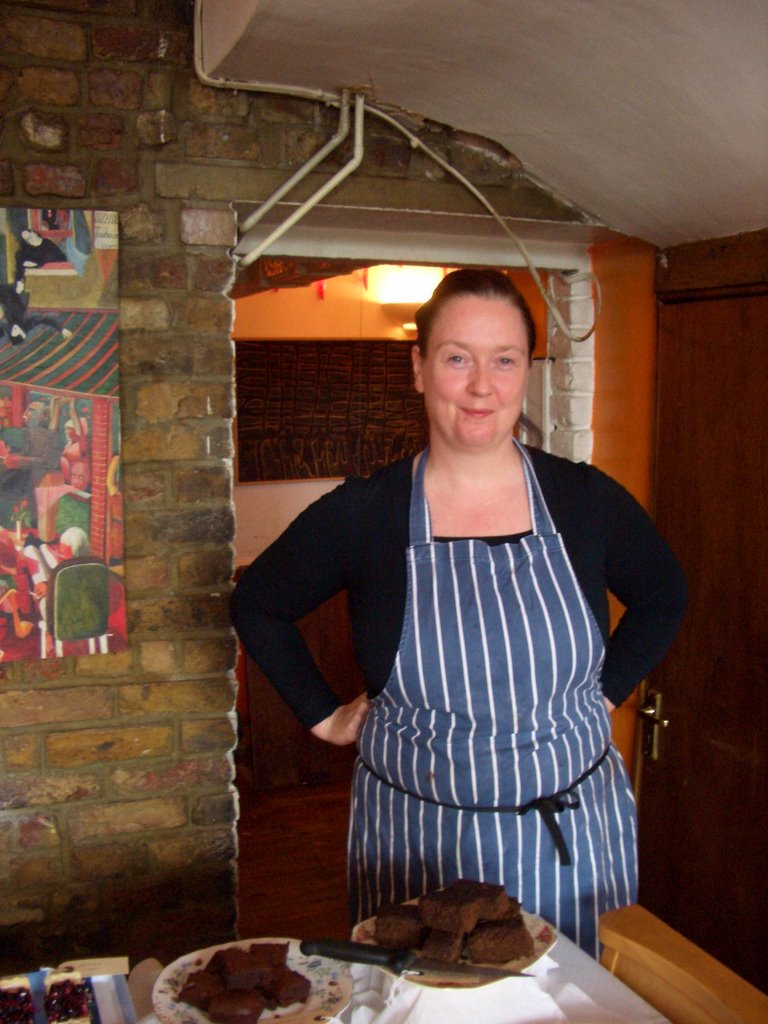
We held a coffee morning today at the restaurant, and Chefette did her part by baking a couple of cakes and helping out with service. A fabulous excuse to eat cake and give to charity at the same time! Big thanks to my pals Lee, Nicola and Stephen who gave their support.

Here are a few photos from the day, including one of the gang with the Mayor of Southwark and the Southwark Town Crier.